Know what you're wearing: the cloth, the garment, the occasion and the care.
Indian clothing has never been just fabric. It is a living craft, rooted in centuries of heritage, from the rhythm of the hath ka loom to the precision of the tailor's cut.
Eri silkRISA × aantarDESI · Assam
Move across the cloth · Drag to turn it
Eri silk
Peace silk · Ahimsa silk · Assam and the Northeast
The silk of the Northeast, spun only after the moth has left its cocoon. No silkworm is killed to make it, which is why it is called peace silk.
Fibre
Silk from the eri silkworm, which feeds on castor leaves.
How it's made
Open cocoons can't be reeled into one long filament, so the fibre is spun by hand, much like wool, then woven on handlooms.
Character
Matte, soft and slightly woolly, with a gentle slub. Warm in winter, cool in summer, and softer with every wear.
Best for
Bandhgalas, waistcoats, sleeveless jackets and kurtas.
At aantarDESI
The base of the RISA × aantarDESI capsule, hand-woven in Assam.
Care
Dry clean, or hand wash cold with a mild detergent. Dry flat in the shade.
Warmth3/5
Breathability4/5
Drape3/5
Sheen1/5
Weight3/5
Pashmina
The Himalayan cashmere · Changthang, Ladakh · woven in Kashmir and Himachal
The fine winter undercoat of the Changthangi goat, which grazes the high plateau of Ladakh. It is combed out by hand each spring, then spun and woven in Kashmir.
Fibre
Goat down of around 12 to 16 microns, finer than a human hair.
How it's made
Combed, cleaned by hand, spun on a charkha and woven on a handloom.
Character
Exceptionally warm for its weight, very soft, with a quiet matte bloom.
Best for
Winter vests, jackets, shawls and linings.
At aantarDESI
The olive zipper vest and a jacket with hand-trunk knitted pockets, both RISA × aantarDESI.
Care
Dry clean only. Fold rather than hang, and store in muslin with neem leaves or cedar.
Warmth5/5
Breathability3/5
Drape4/5
Sheen2/5
Weight1/5
Pashmina Kani
Kani weave · Kanihama, Kashmir
A tapestry weave in pashmina. Instead of a shuttle, the weaver uses dozens of small wooden spools called kanis, each carrying one colour, and follows a coded pattern called the talim.
Fibre
Pashmina.
How it's made
Woven on a handloom one weft colour at a time. An intricate piece can take many months.
Character
Dense, painterly paisley and floral motifs woven into the cloth itself, not printed or embroidered on top.
Best for
Festive vests, collars and cuffs, shawls.
At aantarDESI
The Festive Edition vestment, with Kani collar and cuffs.
Care
Dry clean only. Keep perfume off the cloth and store it flat.
Warmth5/5
Breathability3/5
Drape3/5
Sheen2/5
Weight2/5
Matka silk
Hand-spun mulberry silk · Spun and woven in eastern India
Spun by hand from the short mulberry silk fibres left over after reeling. The natural gum is not fully removed, so the yarn stays nubby and the cloth has a rich, uneven texture.
Fibre
Mulberry silk waste, hand-spun.
How it's made
Hand-spun, then woven on handlooms into a coarse, textured cloth.
Character
Matte with a faint lustre, textured to the touch, and it holds a structured shape well.
Best for
Achkans, bandhgalas and kurtas for day ceremonies.
At aantarDESI
The ivory matka silk achkan, with fine gold detailing on the collar, placket and cuffs.
Care
Dry clean. Iron on the reverse at a silk setting.
Warmth3/5
Breathability4/5
Drape2/5
Sheen2/5
Weight3/5
Handwoven linen
Flax · Woven across India
Woven from the stem fibres of the flax plant. Handwoven linen keeps a visible slub that reads as texture from across a room.
Fibre
Flax, a bast fibre.
How it's made
Spun and woven, here on handlooms, which leave an organic slub in the cloth.
Character
Crisp, cool and highly breathable. It creases easily, and the creases are part of its look.
Best for
Shirts, camp collars, summer jackets and kurtas.
At aantarDESI
The Linen Essential and The Linen Edit.
Care
Gentle cold wash, dry in the shade, and iron while still slightly damp.
Warmth1/5
Breathability5/5
Drape3/5
Sheen1/5
Weight2/5
Khadi
Hand-spun, hand-woven · Across India
Cloth that is both hand-spun and hand-woven, most often cotton. Gandhi made it a symbol of self-reliance, and it is still made in homes and village centres across India.
Fibre
Usually cotton; also silk and wool.
How it's made
Yarn spun on a charkha, then woven on a handloom.
Character
Breathable and slightly irregular. It softens with every wash.
Best for
Kurtas, shirts and Nehru jackets.
At aantarDESI
Available on request for kurtas, shirts and Nehru jackets.
Care
Gentle wash; it may shrink slightly the first time. Iron while damp.
A wild silk from silkworms that feed on forest trees such as arjun and sal. Its natural colour is a deep honey gold, and its texture is coarser and more matte than mulberry silk.
Fibre
Silk from Antheraea silkworms, often reared by forest communities.
How it's made
Reeled or spun from cocoons gathered from the forest, then woven on handlooms.
Character
Natural gold tone, slightly uneven, with a dry hand and a gentle sheen.
Best for
Festive kurtas, Nehru jackets and embroidered pieces.
At aantarDESI
The festive Tussar silk kurta, hand embroidered and finished with recycled sequins.
Care
Dry clean. Store folded in muslin, away from damp.
Warmth3/5
Breathability4/5
Drape3/5
Sheen3/5
Weight3/5
Yak wool
Khullu · High altitudes of Ladakh
The soft down of the Himalayan yak, combed out as the animals shed in spring. It is as warm as merino, breathes well and, unlike many wools, rarely itches.
Fibre
Yak down, often blended with pashmina for softness.
How it's made
Combed by herders, then spun and woven by hand.
Character
Matte, earthy and textured, in natural browns, greys and taupes.
Best for
Winter jackets, waistcoats, stoles and even footwear uppers.
At aantarDESI
RISA × aantarDESI jackets and loafers in yak wool with pashmina and hand-woven leather.
Care
Dry clean or brush. Air after wearing, and store with neem or cedar.
Warmth5/5
Breathability4/5
Drape2/5
Sheen1/5
Weight3/5
At a glance
Compare the cloths
Ratings are relative, from 1 to 5. Weight: 1 is lightest. Every handwoven piece varies a little.
Cloth
Warmth
Breathability
Drape
Sheen
Weight
Best for
Eri silk
●●●○○
●●●●○
●●●○○
●○○○○
●●●○○
Bandhgalas, waistcoats, sleeveless jackets and kurtas.
Pashmina
●●●●●
●●●○○
●●●●○
●●○○○
●○○○○
Winter vests, jackets, shawls and linings.
Pashmina Kani
●●●●●
●●●○○
●●●○○
●●○○○
●●○○○
Festive vests, collars and cuffs, shawls.
Matka silk
●●●○○
●●●●○
●●○○○
●●○○○
●●●○○
Achkans, bandhgalas and kurtas for day ceremonies.
Handwoven linen
●○○○○
●●●●●
●●●○○
●○○○○
●●○○○
Shirts, camp collars, summer jackets and kurtas.
Khadi
●●○○○
●●●●●
●●○○○
●○○○○
●●○○○
Kurtas, shirts and Nehru jackets.
Tussar silk
●●●○○
●●●●○
●●●○○
●●●○○
●●●○○
Festive kurtas, Nehru jackets and embroidered pieces.
Yak wool
●●●●●
●●●●○
●●○○○
●○○○○
●●●○○
Winter jackets, waistcoats, stoles and even footwear uppers.
Weaves of India
Every region has a language
India is not a trend board; it is a living archive. Each of these weaves belongs to a place, and each takes weeks or months on the loom.
Origin · Varanasi, Uttar Pradesh
Banarasi brocade
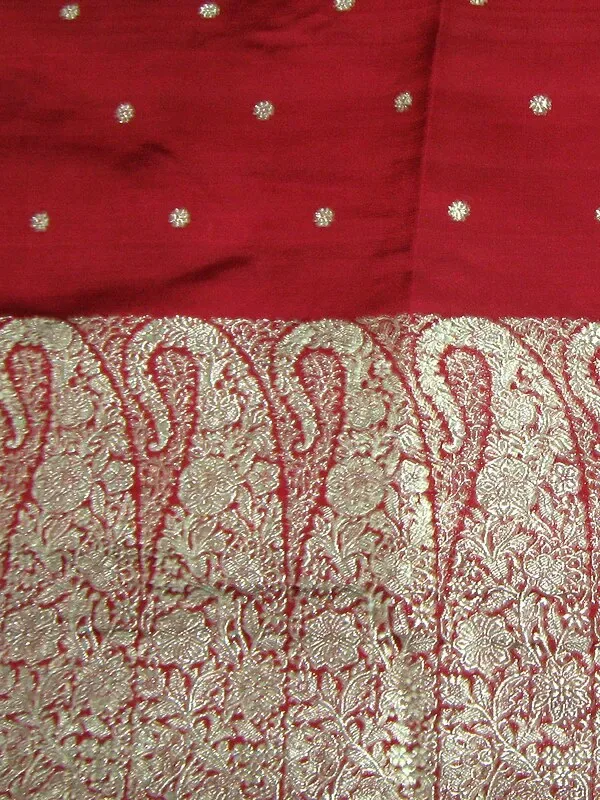
Silk woven with gold and silver zari into dense floral and paisley brocades. It flourished under Mughal patronage and is now protected by a GI tag.
Pure silk with real or tested zari
Kadhua: motifs woven in by hand, one by one
Months on the loom for a heavy piece
Origin · Kanchipuram, Tamil Nadu
Kanchipuram silk
Heavy mulberry silk with wide contrast borders, often woven separately and interlocked with the body so they never part.
Mulberry silk and zari
Korvai: border and body joined on the loom
Temple, checks and coin motifs
Origin · Assam
Muga silk
The golden silk of Assam, from a silkworm found nowhere else. Its natural sheen deepens with age and washing.
Silk of Antheraea assamensis
Grown and woven only in Assam
Traditionally worn as mekhela chador
Origin · Paithan, Maharashtra
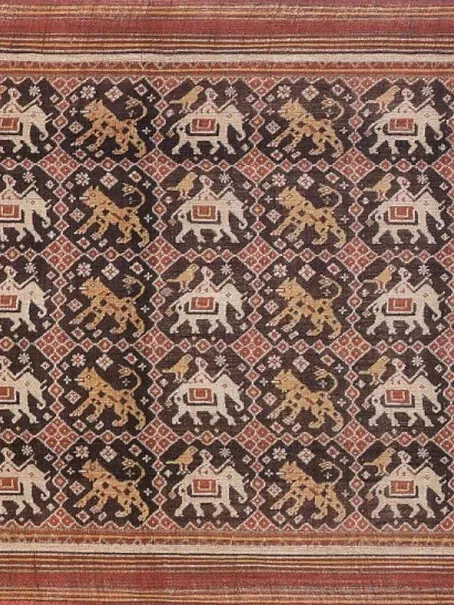
Paithani
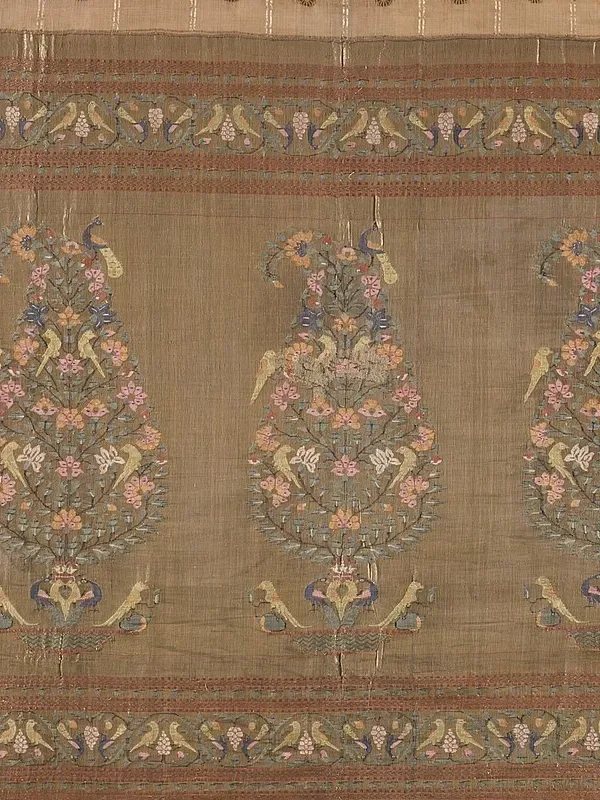
Silk with tapestry-woven zari borders and pallus: peacocks, parrots and lotus motifs, patronised by the Peshwas.
Silk and zari
Each motif woven by interlocking weft
Identical on both sides
Origin · Patan, Gujarat
Patan Patola
Double ikat: both warp and weft are tied and dyed before weaving, so the pattern appears only as the threads meet.
Silk, natural dyes
Pattern dyed into the yarn
One of the rarest weaves in the world
Origin · Chanderi, Madhya Pradesh
Chanderi
Sheer, light silk-cotton with a gentle sheen, often scattered with small zari buttis. A summer cloth since royal times.
Silk warp, cotton weft
Feather-light and translucent
Woven in a town of handlooms
Weave photographs via Wikimedia Commons, cropped: Kanchipuram silk: రహ్మానుద్దీన్, CC BY-SA 3.0 · Muga silk: পাপৰি বৰা, CC BY-SA 4.0 · Banarasi brocade: आशीष भटनागर, public domain · Paithani: LACMA, public domain · Patan Patola: unknown, public domain · Chanderi: Shoot stufz, CC BY-SA 4.0 · Khadi: Vis M, CC BY-SA 4.0
Hath ka loomHandloom
Handloom
The hath ka loom
A handloom is worked by the weaver's hands and feet, with no motor. Pit looms sit over a shallow pit in the floor; frame looms stand free. Either way, each pass of the weft is placed by a person.
That is why handwoven cloth carries small irregularities: a thicker thread here, a slub there. They are the signature of the hand, not flaws, and they make each length of cloth one of a kind.
aantarDESI works with clusters across India, including tribal clusters in Ladakh and Assam through RISA, and soon 9 artisan clusters through Radha Raja.
A tailored jacket with a mandarin collar buttoned to the throat, born in the princely state of Jodhpur. The most versatile piece in Indian formal wear.
Wear it for · Weddings, receptions, black-tie evenings
Jodhpur suit
Jodhpuri
A bandhgala jacket with matching trousers, or with jodhpurs: riding breeches cut full at the hip and close at the calf.
Wear it for · Formal evenings, state occasions
Achkan
Court coat
A knee-length coat, fitted through the chest and flared below the waist, fastened down the front. It comes from Mughal and Rajput court dress.
Wear it for · Wedding ceremonies, the groom's family
Sherwani
The groom's coat
Longer and more ornate than an achkan, worn over a kurta with churidar or straight trousers, often with a stole.
Wear it for · The wedding day
Nehru jacket
Nehru vest · Bandhgala vest
A sleeveless or hip-length jacket with a mandarin collar, layered over a kurta or a shirt.
Wear it for · Festive mornings, mehendi, everyday formal
Kurta
Tunic
A long, easy shirt with side slits, from hip to knee length. Worn with churidar, pyjama, dhoti or trousers.
Wear it for · Daily wear to festive
Pathani suit
Pathani
A long kurta with a shirt collar and front placket, worn with a salwar. Adapted from Pashtun dress.
Wear it for · Eid, festive gatherings, relaxed occasions
Safari jacket
Bush jacket
A belted utility jacket with patch pockets, which aantarDESI cuts in textured slub weaves.
Wear it for · Day events, travel
Safa
Turban
A tied turban, often in bandhani or leheriya, worn by the groom and family at weddings.
Wear it for · Baraat, wedding ceremonies
Jutti
Mojari
Hand-stitched leather slip-ons, often embroidered, from Rajasthan and Punjab.
Wear it for · With achkans, sherwanis and kurtas
What to wear when
Dress for the occasion
Wedding ceremony
The groom
Wear
Sherwani or achkan, with a safa and juttis
Cloth
Ivory matka silk, or Pashmina Kani for winter
Colour
Ivory, gold, deep red
Tip
Begin early: bespoke needs time for at least two fittings.
Eri silk is spun from open cocoons after the moth has flown, so no silkworm is killed to make it. It is matte, warm and softer with every wear.
The cloth has slubs and small variations. Is that a flaw?+
No. Handwoven and hand-spun cloth carries the marks of the hand that made it. Those slubs are the fabric's quiet signature, and they make each length one of a kind.
What's the difference between an achkan and a sherwani?+
Both are long coats. An achkan is fitted through the chest and flares below the waist; a sherwani is usually longer and more ornate, and is the groom's coat. See the garment glossary.
Which cloth should I choose for a winter wedding?+
Pashmina, Pashmina Kani, yak wool and eri silk all keep you warm. For a summer or daytime function, linen, khadi and Tussar are cooler. Compare them in the Cloth Library.
How do I care for silk and pashmina?+
Dry clean pashmina and Kani, fold rather than hang them, and store them in muslin with neem leaves or cedar. Eri silk can be dry cleaned or hand washed cold. The full care guide covers every cloth.